Ring launches AI‑driven indoor drone camera and security robot
Amazon's Ring brand will ship a $250 indoor drone cam in January 2027 and a $1,000 roving robot in December 2026, sparking new privacy debates.
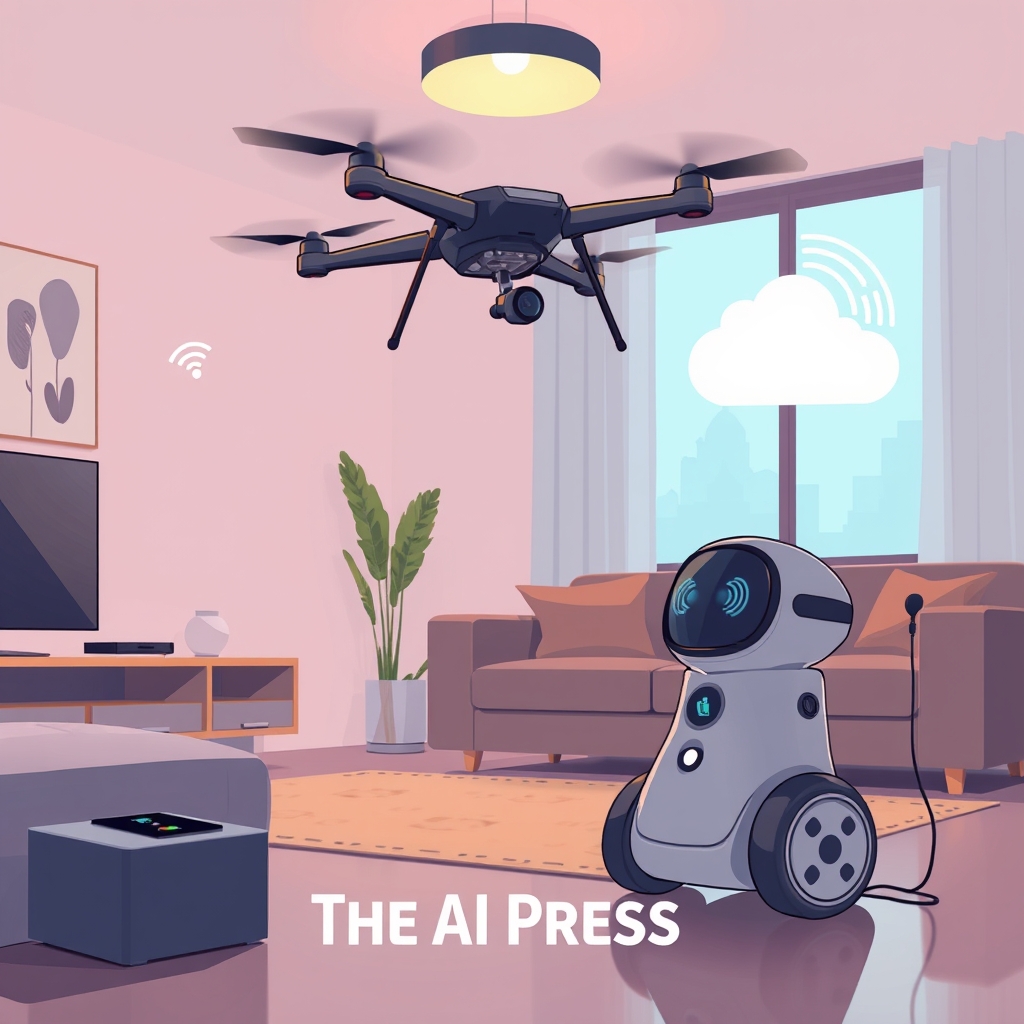
Amazon’s Ring division announced Tuesday that it will begin shipping two new AI‑enabled security devices for indoor use—a flying Drone Cam priced at $250 and a ground‑based Rover Cam priced at $1,000—starting in late 2026 and early 2027.
The Drone Cam, weighing about 165 grams, lifts from a charging dock, flies for five to eight minutes, and streams live video to a smartphone via Ring’s cloud servers. It uses a cloud‑based AI Pilot to plot routes, avoid obstacles and respond to alerts from existing Ring sensors. The Rover Cam, a wheeled robot, can patrol up to 5,000 square feet for roughly 30 minutes, recording in 4K and emitting a siren and light tower during patrols.
Both devices rely on Wi‑Fi and the Alexa Home Map for indoor navigation, and they cannot be manually piloted. The drone’s camera offers a 148‑degree field of view with 2K resolution and dual LEDs for low‑light illumination, while the robot’s mast lifts a 4K camera to scan rooms from above. The units perform self‑diagnostics before each mission and will not launch if a motor fault is detected.
Ring says video streams are protected by its Throw Away the Key encryption, which rotates encryption keys every few minutes and deletes server‑side copies after processing. Accounts require two‑factor authentication, but privacy advocates note that the encryption is not end‑to‑end and that Ring has faced FTC enforcement actions for allowing employee access to user footage and for lax security that exposed tens of thousands of accounts.
The products build on a decade of Ring experimentation with indoor drones, beginning with a concept in 2016 and a limited Always Home Cam release in 2020 that was later shelved. Earlier attempts, such as the invite‑only Day 1 Edition in 2021 and the Astro home robot, informed the decision to shift most processing to the cloud to keep the drone lightweight. The new devices are assembled in Texas and, because they stay under the 250‑gram FAA threshold, they do not require registration.
Ring has opened pre‑orders for the Rover Cam and will accept email sign‑ups for the Drone Cam, pending FCC authorization for the latter. Customers will be able to set custom patrol schedules and define no‑fly zones, but the devices will remain confined to a single‑floor indoor environment. Industry observers say the launch could expand the market for autonomous home security while reviving longstanding concerns about surveillance, data sharing with law enforcement and potential hacking of connected cameras.